Summer evenings on the Altopiano have a rhythm of their own. The light turns gold late, the valleys fill with blue, and by half past ten the sky over the pastures is doing something most city visitors have never properly seen. You can chase all of that in a rushed way — drive, eat, drive again, squint upwards — or you can anchor the evening on three simple things: a viewpoint, a table, and a patch of dark grass. Everything else happens in between.
What follows is a plan, not a schedule. It bends easily around weather, hungry children and a restaurant that turns out to be closed on Tuesdays.
Start with sunset and work backwards
The single most common mistake is booking dinner first and hoping the light cooperates. Do it the other way round. Look up the sunset time for your date — anywhere from roughly a quarter past nine in late June to around eight by the end of August — and then subtract.
Subtract forty-five minutes for the drive and the short walk to your viewpoint. Subtract another twenty for parking, finding the right gate, and the inevitable moment when someone has to go back for a jacket. That gives you your departure time from wherever you are staying. It sounds fussy. It is the difference between arriving as the light turns copper and arriving as the last orange smudge disappears behind Monte Zebio.
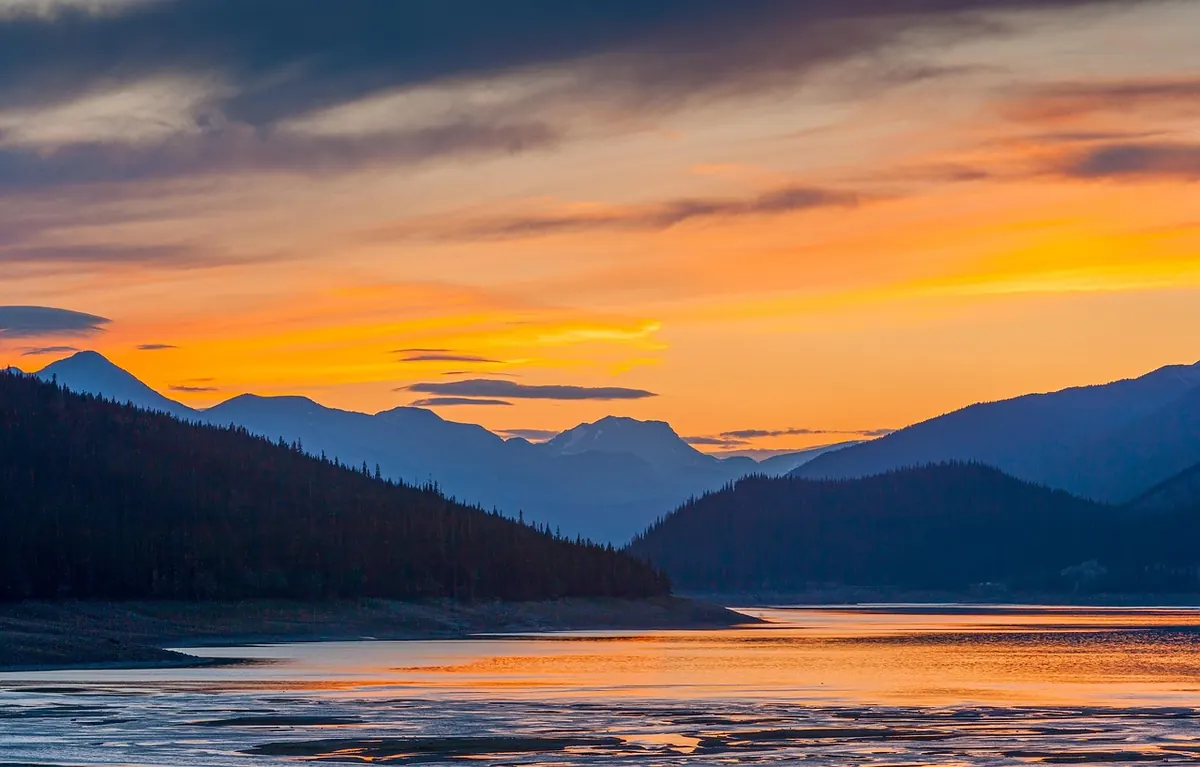
One local detail worth knowing: the plateau's own ridges eat the sun early. On a west-facing slope you will often lose the disc twenty or thirty minutes before the official sunset time, and the show moves straight into the long, slow afterglow that is honestly the better half. Plan to be standing there for that, not for the minute of sunset itself.
Choose the right kind of viewpoint
There is no single best spot. There are three useful shapes, and you should pick according to how much walking your group will tolerate at the end of a day.
- A terrace or meadow edge near a village. Easy, no head torches needed, but more ambient light afterwards. Good with grandparents or small children.
- A malga pasture with an open western horizon. Somewhere along the roads above Roana or toward the Piana di Marcesina, or the meadows around the Forte Interrotto side of Asiago. Big sky, a few cows, usually a fence to lean on.
- A pass or an old fort wall facing west. The stonework gives you something to sit against when the air cools, and the view tends to be wider than the roadside pull-offs.
Whatever you choose, check three things in daylight or on a map beforehand: that the horizon really is open to the west, that you are not parking across a farm track, and that the ground is not private pasture with a gate you cannot open. Alpine farmland is working land. Cross fences only where there is a stile, close every gate you open, and give cattle with calves a very wide berth — they are not aggressive, but they are not interested in your itinerary either.
Book the early sitting, not the late one
Restaurants on the Altopiano tend to fill between half seven and eight, and kitchens in smaller villages often stop taking orders earlier than you would expect. Aim to sit down around seven, or even half six, and you will be out with a full stomach and time to spare.
This also solves the driving problem. Choose a table within fifteen or twenty minutes of your dark-sky spot, ideally on the same road. A forty-minute transfer along unfamiliar mountain roads after a bottle of wine and a plate of polenta with mushrooms is not the way anyone wants to end the evening.
Order accordingly, too. A long tasting menu is lovely and completely incompatible with a nine o'clock appointment with the Milky Way. Two courses, something local — Asiago in its various ages, speck, bigoli, grilled meat, a slice of cake — and you are done. Call ahead in July and August; small dining rooms fill, and a phone call in the afternoon saves a wasted drive.
If you would rather skip the restaurant
A picnic works well if you eat it at the viewpoint rather than at the dark-sky site. Bread, cheese, tomatoes, fruit, a thermos of something hot for later. Eat before dusk so you are not juggling crumbs and a torch in the dark, and take everything away with you.
Use the blue hour to move, not to sit
The hour after sunset is when most people waste their best chance of the night.
It is still light enough to see where you are going and dark enough for the first stars to appear. That is exactly the window you want for relocating to your stargazing spot, setting out a blanket, and finding the flask. Arriving at a dark site by car headlights at eleven o'clock is the other way to do it, and it costs you half an hour of night vision for everyone already there.
Once you have found your spot, sit still. Eyes need roughly twenty to thirty minutes to adapt properly, and every glance at a phone screen resets the clock. Set the phone to its darkest setting or, better, leave it in a pocket.
Pick darkness over drama
The Altopiano is not a certified dark-sky reserve, but it has something almost as useful: large areas of open pasture well away from the lit centres of Asiago, Gallio and Roana. The trick is distance from the valley-floor glow, not altitude. A flat meadow twenty minutes from the nearest streetlamp will beat a famous summit with a car park full of headlights.
Practical choices that make a real difference:
- Get away from the road. Even a distant passing car ruins a dark adaptation.
- Avoid anywhere with a security light on a barn or a hotel sign.
- Use a red torch or a red filter over a normal one; it preserves night vision.
- Bring binoculars if you have them. A cheap pair shows far more than you expect — clusters, the brighter nebulae, the moons of Jupiter.
- If you want company and context, the historic astrophysical observatory above Asiago opens to the public on selected evenings in summer. Check its programme locally rather than assuming.
The summer sky rewards patience. The Milky Way arches overhead on clear, moonless nights in July and August, and the Perseids arrive in the first half of August, peaking around the twelfth. Check the moon phase before you commit to a late night: a bright moon washes out everything faint, though it also lights the walk back to the car, which is a fair trade.
What to bring, and what to leave behind
- Layers. It cools fast above a thousand metres once the sun is gone; a fleece and a windproof layer even in August.
- Closed shoes and a blanket or mat. Grass holds dew from quite early in the evening.
- A thermos, water, and a small snack.
- Insect repellent. The meadows are lovely and so are the mosquitoes at dusk.
- A head torch with a red mode, plus a spare battery or a charged power bank.
- An offline map. Mobile coverage thins out on the quieter roads.
Leave behind the drone, the Bluetooth speaker, and the urge to light a fire. The last one matters: open flames are restricted or banned across much of the plateau in dry summer periods, and the rules change with conditions. Ask locally if you are unsure.
A template you can copy
Here is the whole evening as a single sequence, adjusted to a midsummer sunset:
- Five in the afternoon: check the forecast, the sunset time and the moon phase. Confirm the restaurant booking.
- Half seven: sit down for dinner near your chosen area, two courses, no rush but no lingering either.
- Nine: drive to the viewpoint, arriving with the light still high enough to walk comfortably.
- Nine to half nine: watch the afterglow, then drive or walk the short distance to the dark spot.
- Ten onwards: settle in, let your eyes adapt, and stay until you are cold or sleepy, whichever comes first.
Two honest caveats. First, a cloudy night is not a failed night — the afterglow over the valleys is worth the trip on its own, and a good dinner is not improved by sulking about the sky. Second, mountain weather turns. If thunder is forecast, stay off the open pastures and out of high, exposed places; that is not a night to be patient with. Bring a torch, drive slowly on the way down, and leave the fields as quiet as you found them.
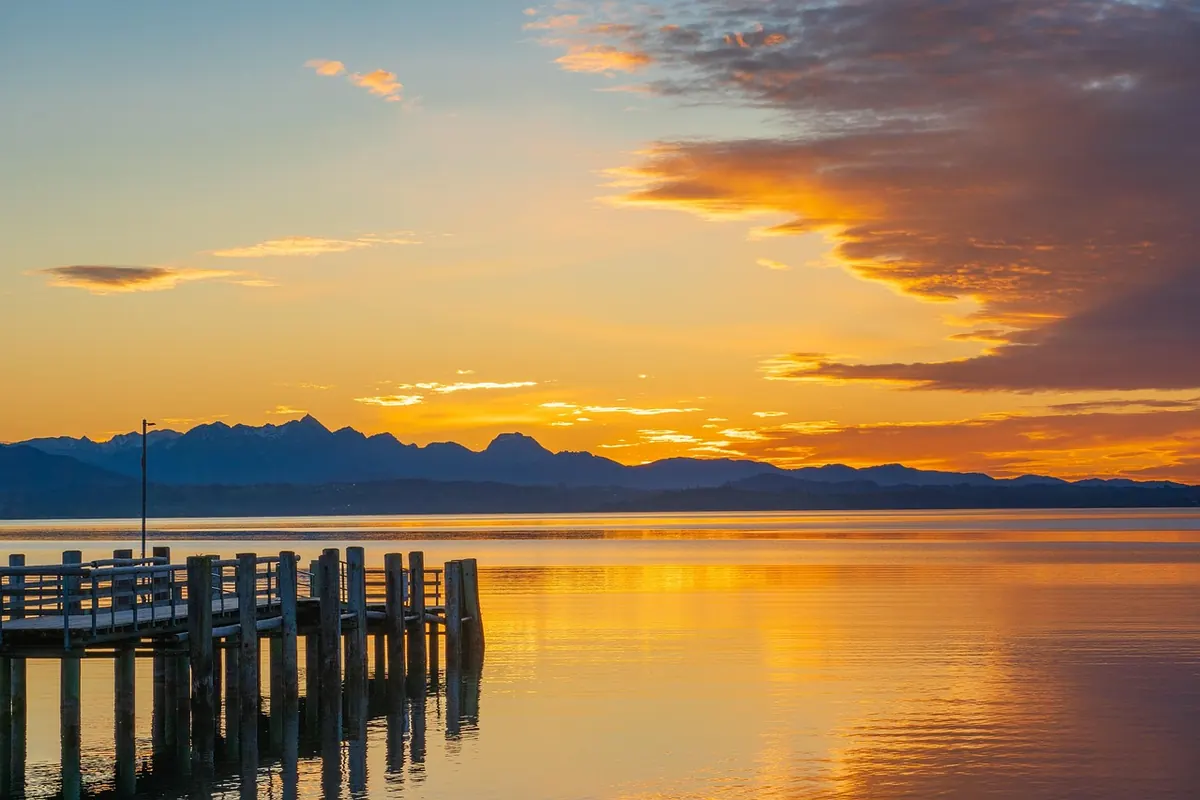
Photo: ChiemSeherin / Pixabay