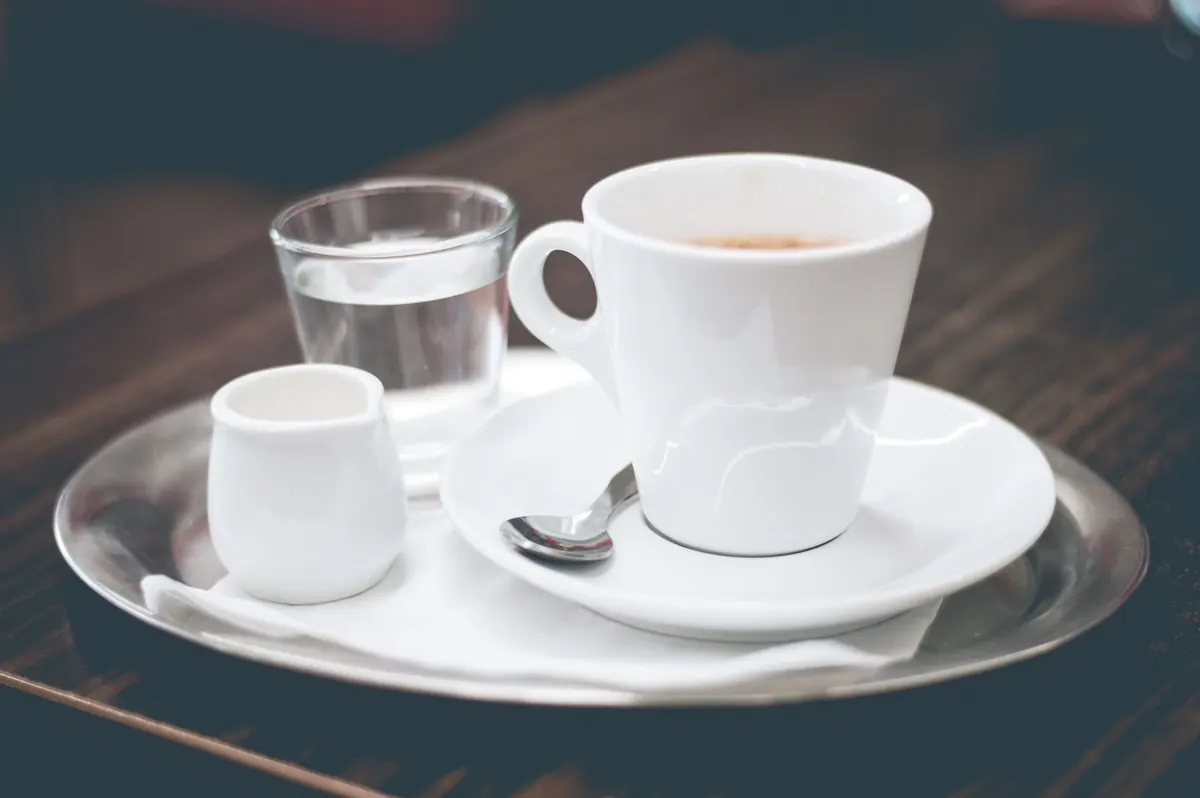
You walk into a bar in Asiago at eight in the morning, jacket still damp from the fog, and ask for a coffee. What lands on the counter is a small white cup, an inch of dark liquid, and no follow-up questions. That is the first lesson: on the Altopiano, coffee is not a size or a style. It is a decision you make before you open your mouth.
Ask for a caffè corretto at nine in the morning and you will get a look. Ask for hot chocolate in July and you will get one anyway, with a smile that says your call. Neither order is wrong. Both simply belong to a particular hour, and the mountain keeps those hours more strictly than visitors expect.
Un caffè: the order that needs no adjectives
In any bar from Gallio to Enego, "un caffè" means espresso. Not a filter coffee, not a mug, not something with milk unless you say so. Ordering "un espresso" is perfectly understood, but it sounds faintly like a phrase from a menu in another country. The local version is two words: un caffè, per favore.
It arrives hot, small and slightly bitter, with a saucer, a spoon and often a thimble of water on the side. The whole point is that it takes ninety seconds. Drink it at the counter, standing, while the barista serves someone else. Sugar goes in before the first sip, not after — by the time you have stirred it twice, the crema is already settling.
Two practical notes. First, there is no large. If you genuinely want a longer, weaker cup, ask for a caffè lungo or an americano and accept the small pause that follows; you will get it, but you have announced yourself as a visitor. Second, don't carry an espresso to a table and nurse it for twenty minutes. It goes cold fast and turns harsh. If you want to sit down, order something worth sitting down for.
Caffè corretto: for cold mornings and long evenings
Corretto means corrected, and the correction is alcohol. Usually grappa, given where you are, though sambuca, rum or a house liqueur turn up depending on the bar and the barista's mood. The spirit goes into the cup before or after the coffee — never in place of it. It is still an espresso; it just has a second purpose.
This is the drink for the end of a snowshoe walk when your hands have stopped working properly, for the half hour after the lifts close, for the last stop of an evening before the walk back to the hotel. It is not the drink for the start of a climb, and it is emphatically not the drink before you drive down the valley. Think of one as a ritual and two as a plan for the afternoon.
Ordering is straightforward: "un corretto" is enough, and the barista will choose the spirit. If you care which one, say "corretto con grappa" or "corretto con sambuca". Drink it slowly, in the same small glass, standing up. Some bars bring the bottle and let you decide how corrected you would like to be. That is a kindness, not a challenge.
Cioccolata calda: not the powder you know
Italian hot chocolate is a different substance from the watery cocoa sold elsewhere. It is thick, dark and spoonable, closer to warm pudding than to a drink, and it stays hot for an unreasonable amount of time. Order it con panna and a swirl of unsweetened whipped cream arrives on top; order it plain and you get the full density of the thing.
Best moment? Mid-afternoon, after two hours of being cold. Or a wet Sunday in November, or the twenty minutes after a beginner's ski lesson ends badly. It is not a quick stop — the first five minutes it is too hot to do anything but stir — so treat it as a sit-down. Children are usually given a smaller cup, and no one minds if you order a glass of water alongside.
If you want the chocolate experience without losing the afternoon, ask for a marocchino: espresso, a dusting of cocoa and a little milk foam in a small glass. It is the bridge between the two drinks, and it is what a lot of locals order when they want something sweeter than a coffee but are not ready to sit down.
The rest of the counter, briefly
Most Altopiano bars run to the same short list. Knowing it saves you the awkward scan of the wall behind the till.
- Cappuccino or latte macchiato — a morning drink, before eleven, ideally with a brioche or a krapfen. Nobody will refuse you one at four in the afternoon, but you will be quietly filed as a visitor.
- Caffè macchiato — espresso with a drop of milk. Ask for caldo if you want it steamed, freddo if you want it cold. Fine at any hour.
- Ginseng — sweet, milky and popular in Veneto bars. A mid-afternoon drink, not a morning one.
- Decaffeinato — say "un deca" and you will be understood instantly. The right order after a long dinner.
- Orzo — roasted barley, no caffeine, nutty and mild. Good for children and for late evenings.
- Tè caldo — often arrives as a pot with lemon and honey. Ask for milk only if you want to see the barista's face change.
- Bombardino — egg cream, brandy and coffee under whipped cream. A dessert in a glass, more common a little further north, and worth trying once when it is snowing.
Matching the drink to the hour
If you remember nothing else, remember the rhythm. It is not a rule anyone will enforce, but it is how the day is built.
- Before nine — cappuccino, standing, with something baked. This is the busiest ten minutes of the bar's day.
- Half past ten — espresso at the counter, two minutes, then back outside. The classic mid-morning reset.
- After lunch — espresso again. A corretto if the weather has turned and you are not driving anywhere.
- Three or four in the afternoon — cioccolata calda, seated, gloves off, boots steaming under the table.
- After dinner — corretto or a deca. The evening version of exactly the same ritual.
Milk in the morning, coffee at meals, chocolate in the afternoon, alcohol at the edges of the day. Once you notice it, the whole menu stops looking like a list of options and starts looking like a timetable.
Ordering without overthinking it
In many bars you pay first at the till and then hand the receipt to the barista; in smaller places you pay at the end. Watch what the person ahead of you does, or simply ask "pago dopo?" — nobody minds. Standing at the counter is cheaper than table service and considerably faster, and if you are asked where you would like it, al banco is the answer.
Tipping is not expected. Rounding up, or leaving the small coins, is normal and appreciated. A glass of water with your coffee is usually free for the asking. And if you are ordering for a group, do it in one go and let the barista work through the list — drip-feeding four separate orders at a busy counter is the one thing that will genuinely try their patience.
Learn three phrases and you can spend a week on the Altopiano without ever ordering badly: un caffè, un corretto, una cioccolata calda con panna. Everything else is commentary. Order the chocolate in July if you like — no one will stop you. It just tastes better in February, when you have earned it.
Photo: Raduz / Pexels